
Rand Finds Footing as SARB Holds Steady: A Cautious Calm Prevails
The South African Rand maintains strength under R17.90 to the dollar after the SARB held rates. What this means for SA markets, investors, and treasurers.
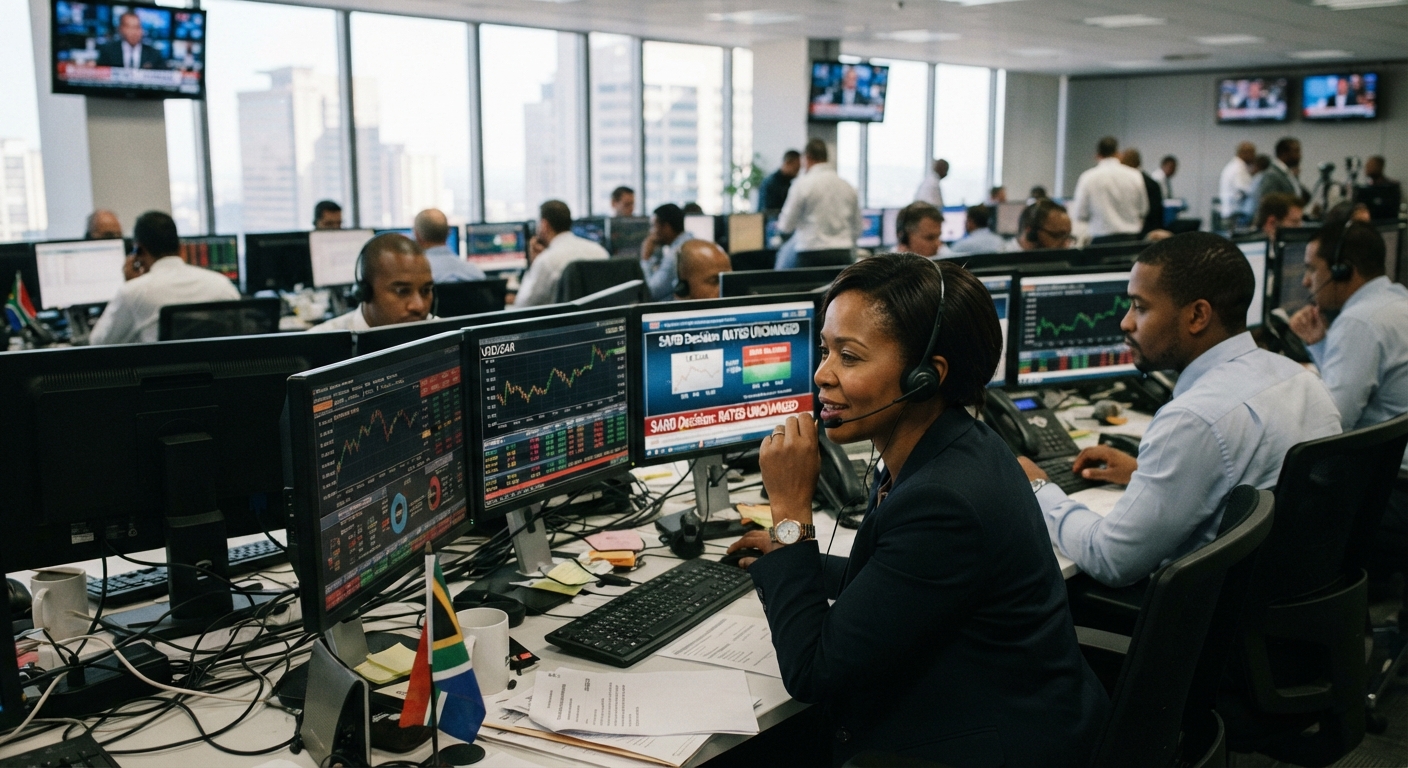
Johannesburg – The South African Rand has demonstrated a degree of resilience, firmly holding its ground below the R17.90 mark against the US Dollar, following the South African Reserve Bank's (SARB) recent decision to keep its benchmark repurchase rate unchanged. This move, widely anticipated by market participants, signals a moment of cautious stability in the domestic financial landscape, as policymakers balance persistent inflationary pressures with concerns over sluggish economic growth.
SARB's Calculated Pause
The Monetary Policy Committee (MPC) opted to maintain the repo rate at 8.25%, effectively pausing a hiking cycle that saw significant increases over the past two years. Governor Lesetja Kganyago highlighted that while inflation remains above the target midpoint, recent data suggests a moderating trend. The decision reflects the central bank's commitment to its inflation-targeting mandate, acknowledging that previous hikes are still filtering through the economy. However, the SARB also underscored the persistent risks, including global oil price volatility and potential second-round effects from administered prices, leaving the door open for future adjustments if conditions warrant. This 'wait-and-see' approach aims to assess the cumulative impact of past tightening without stifling an already struggling economy.External Headwinds, Domestic Anchors
The Rand's performance, while appreciating slightly from recent lows, continues to be buffeted by a confluence of global and local factors. A softer US Dollar, driven by evolving expectations around the Federal Reserve's future interest rate path, has offered some respite to emerging market currencies. However, concerns over China’s economic health and fluctuating commodity prices – key drivers for the Rand – introduce ongoing volatility. Domestically, while the SARB's stance provides a temporary anchor, investor sentiment remains sensitive to South Africa's fiscal trajectory, infrastructure challenges, and the broader political landscape. The relative stability below R17.90 suggests a market absorbing these various inputs, finding a provisional equilibrium as it awaits clearer direction from major global central banks and local policy developments.The Local Angle
For investors, treasurers, and professionals navigating South Africa's capital markets, the SARB's pause and the Rand's current positioning carry significant implications. For equity investors, this stability can reduce currency-related earnings volatility, particularly for import-reliant companies, while exporters might see margins squeezed if the Rand strengthens further. The unchanged interest rates offer a predictable environment for corporate treasurers managing borrowing costs and foreign exchange exposures, potentially reducing hedging premiums. Fixed-income markets could see bond yields stabilize, making South African debt relatively attractive compared to some developed markets. However, the underlying economic challenges mean that any Rand strength could be fragile. Professionals will be closely monitoring forthcoming inflation data, fiscal announcements, and global monetary policy shifts, as these will dictate the SARB's next move and the Rand's trajectory, profoundly impacting asset valuations and strategic investment decisions within the JSE.Source: FX News
More from JSE Markets Daily
financial_markets8 Nov 2026
JSE Insurers: Anchoring Portfolios with Resilient Dividends Amidst Uncertainty
via Google News: property stocks listed corporates
2mRead →
financial_markets8 Nov 2026
JSE Insurers: A Beacon for Dividends in Turbulent Economic Seas
via Google News: property stocks listed corporates
3mRead →
financial_markets8 Nov 2026
Mapletree's SGX Listing: A Global IPO Revival Signal, JSE on Watch
via Google News: property stocks listed corporates
3mRead →